Building With, Not For: How the KRCS Digital Transformation and Innovation is Rewriting the Innovation Playbook
A three-day virtual peer learning event brought together the Kenya Red Cross Society, ICHA, IFRC, and partners to explore how digital transformation and innovation can strengthen humanitarian action. With support from the Swiss Red Cross, discussions highlighted community-centred design, youth-led innovation, the Humanitarian Coding Club, innovation labs, social entrepreneurship, and innovative financing. The event emphasised building with communities, sharing knowledge, learning from challenges, and developing sustainable, locally relevant solutions that strengthen community resilience and improve humanitarian service delivery.
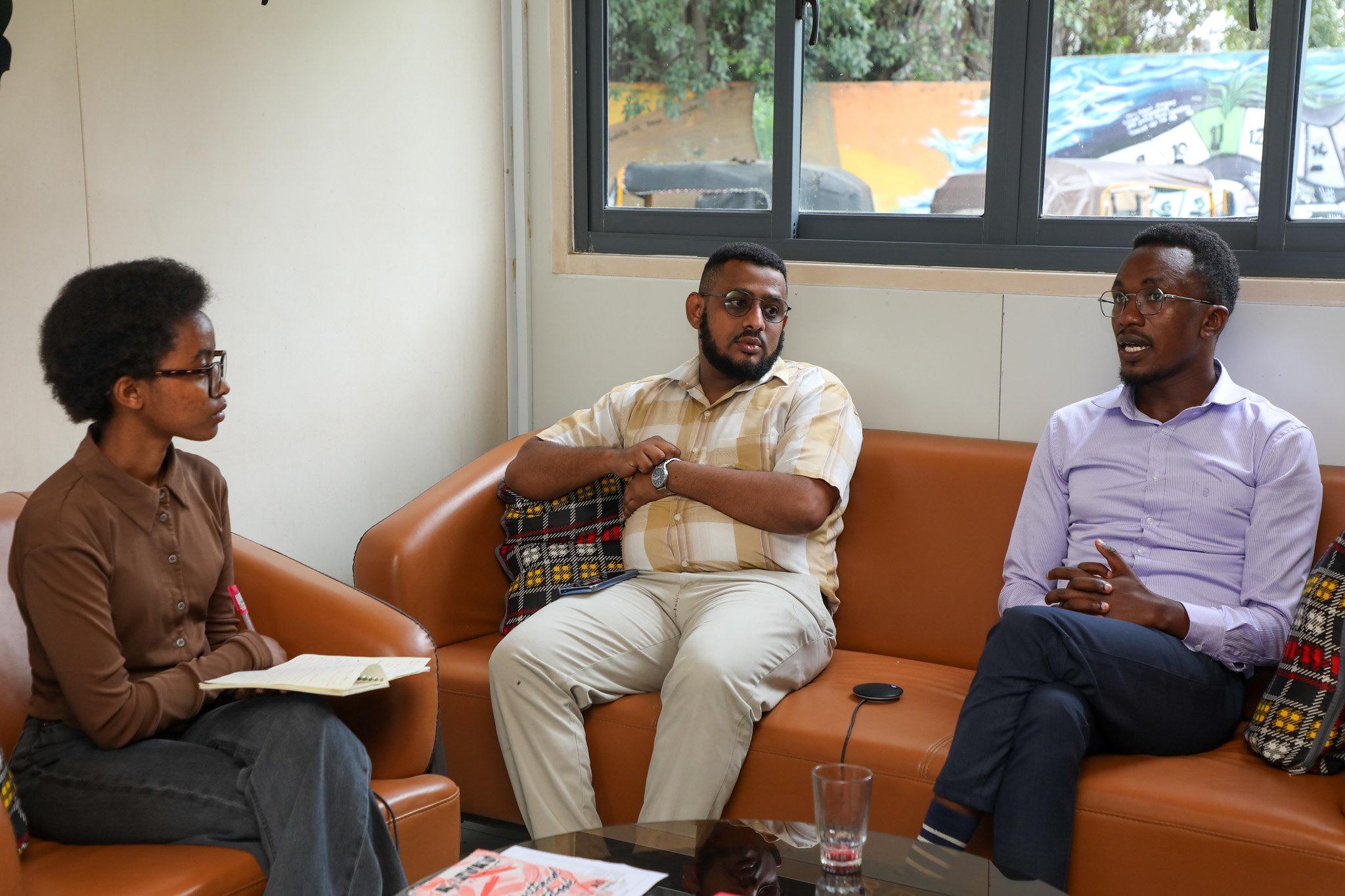
For three days, the Kenya Red Cross Society gathered colleagues and partners from across the Red Cross and Red Crescent Movement for a virtual peer learning event focusing on Digital Transformation and Innovation.
Hosted from September 15 - 17, 2026, the event brought innovation and digital knowledge from the Kenya Red Cross Society, International Centre for Humanitarian Affairs (ICHA), International Federation of Red Cross and Red Crescent Societies (IFRC), and other partners, with support from the Swiss Red Cross.
While the three-day conversation looked at how Digital Transformation and Innovation can change people, communities, processes and humanitarian service delivery, it was far from just technology. The first day of the event delved into Kenya Red Cross' Digital Transformation journey, its starting point, what has changed, and what the organisation has learnt. The conversation covered digital maturity, strategy, governance, community voices, and lived experiences from different teams.
A recurring message across the three days was that transformation is not only about introducing new technology, but about building the way organisations work and serve communities. This was reflected in the emphasis on 'building with' communities, not 'building for' them. The day also gave space for the participants to discuss the successes and challenges experienced during Kenya Red Cross' digital transformation journey. Rather than a straight path to transformation success, the sessions acknowledged the setbacks and lessons, particularly around adoption, governance, resources and the need to start small and go to scale.
Day Two looked at how digital transformation can intersect with innovation, and what that can mean for people and processes. The day focussed on co-creation, programming and organisational systems, while also putting young people at the heart of the conversation. Reflections on youth engagement, youth spaces and the Humanitarian Coding Club showed how young people can bring digital skills, new thinking and an understanding of the challenges in their communities.
One of the messages that stood out was that "youth are not a side program" and could rather be a central player when it comes to successful digital transformation and innovation. The Humanitarian Coding Club was an example of such an approach, bringing young people into the space of identifying humanitarian problems and developing technology-based solutions. The conversations highlighted that innovation and technology are not only about having the tools, but also about providing the opportunity for people to use their skills and knowledge to solve problems.
The Africa Localisation Hub was also introduced, a platform where African National Societies can share knowledge, tools, reports, impact stories and experiences, further underlining the importance of peer learning to learn from elsewhere, and not go down isolated paths. By the third day, the conversation had moved beyond understanding the concepts of Digital Transformation and Innovation to looking at what enables it, and what will happen next. Day three focussed on Kenya Red Cross' innovation journey, including what has been tried, what has worked and what hasn't, and what can be learnt from these experiences. Participants heard a virtual tour of the work in the I.O.Me254 Innovation Labs in Mombasa and Lamu, as the space looks to link innovation to practical skills, prototyping, entrepreneurship and community problem-solving with a focus on enabling community resilience & livelihood, humanitarian innovation, circularity and better environmental management. The discussions demonstrated how the innovation space encourages the journey from ideas to prototyping, and then to business development, while also looking to re-use materials and develop locally relevant solutions.
The conversations also moved into social entrepreneurship and innovative financing. Social entrepreneurship was presented as a way for organisations to develop financially sustainable solutions to social and environmental challenges, as traditional grant funding shifts. Similarly, innovative financing sessions focused on areas such as blended finance, carbon finance, and disaster-risk financing, with a need to develop projects that are technically viable and investment-ready.
The final sessions looked to partnerships and the future of innovation at Kenya Red Cross. The discussions showed how Digital Transformation can support relationship-building with partners and aid resource mobilisation, before moving on to the organisation's innovation roadmap and how solutions can be developed, tested, and scaled.
Across the three days, one message stood out: innovation cannot work in isolation. It needs to involve communities, staff, young people, and partners from government, academia, and the private sector. The event also raised the need for innovation and digital transformation to become part of organisational planning and programming, and not be an activity owned by one team.
While the three-day peer learning event focussed on sharing knowledge and experiences, it wasn't about presenting final solutions. It was more about sharing the journey of getting to those successes, looking at the trials, experiments and learning along the way. From digital systems and youth innovation to community-centred design, innovation labs and new approaches to financing, the conversations pointed to a humanitarian sector that looks to not just respond to crises, but to take a step back and understand evolving community needs, test today’s solutions and build tomorrow’s resilience.
Keep reading
Inside the Digital and Human Architecture of the Kenya Red Cross Society
The Kenya Red Cross Society is transforming humanitarian operations through digital systems that improve efficiency, strengthen data protection, and enhance emergency response. From upgrading enterprise resource planning and digitising procurement to enabling confidential case reporting and modernising volunteer management through the OneRC system, these innovations help streamline processes and mobilise skilled responders faster. At the heart of this transformation is a people-centred approach that uses technology to reduce administrative burdens, protect human dignity, and enable humanitarian teams to focus on saving lives and building community trust.
 EM
.png)
Kenya Launches Digital Hub to Revolutionize Disaster Response
The Kenya National Anticipatory Action (KNAA) Hub, launched by the Kenya Red Cross Society and the National Disaster Operations Centre, is a digital platform designed to strengthen disaster preparedness and response across Kenya. By bringing together real-time weather information, early warning alerts, and data on humanitarian interventions, the Hub improves coordination between government agencies and humanitarian partners. Its live dashboard helps identify vulnerable communities, reduce duplication of efforts, address response gaps, and ensure timely action before disasters strike, protecting lives and livelihoods through a data-driven approach to anticipatory action.